
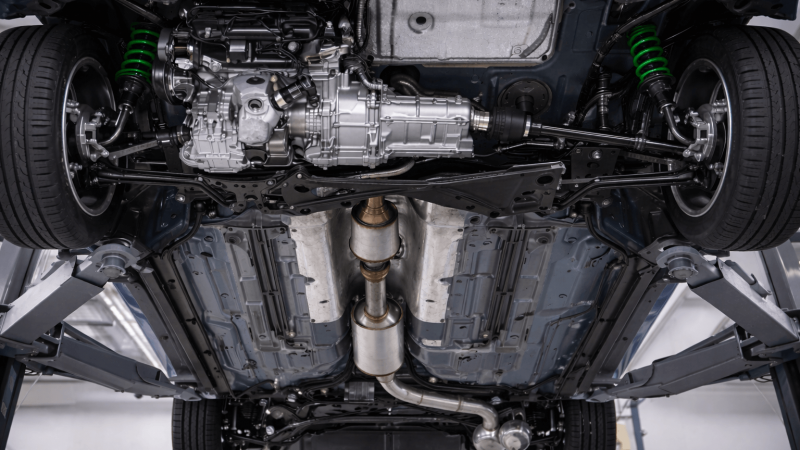
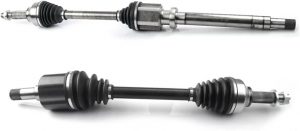
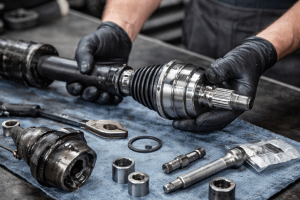
In front-wheel-drive (FWD) vehicles, the driveshafts, also referred to as halfshafts, are responsible for transferring engine torque from the drivetrain directly to the front wheels. Because the front wheels both steer and drive the vehicle, these halfshafts must deliver power while allowing for constant changes in wheel angle and suspension movement. This is accomplished through constant-velocity (CV) joints, which ensure smooth and consistent power delivery without vibration during turning or uneven road conditions.
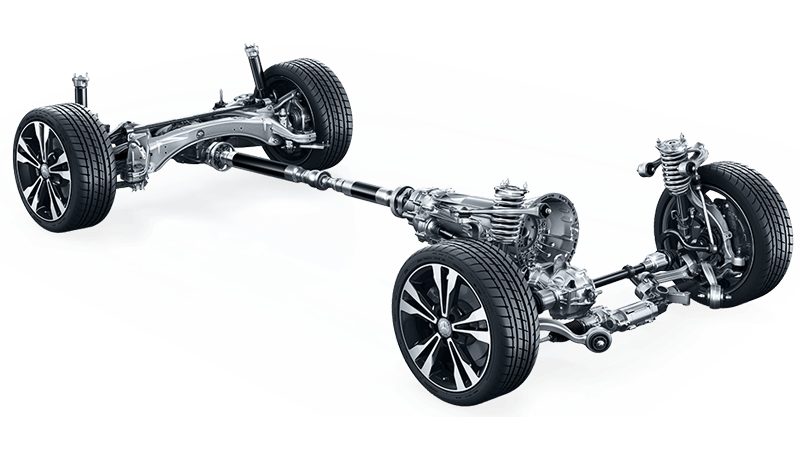
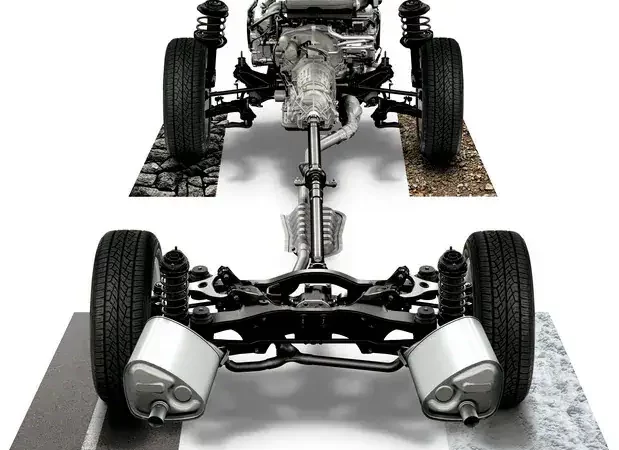
In all-wheel-drive (AWD) vehicles, the driveshaft system becomes more complex. A central driveshaft carries power from the transmission or transfer case to the front and rear differentials, while halfshafts then distribute that power to each wheel. The purpose of this setup is to improve traction and stability by automatically balancing torque between all four wheels. AWD driveshafts and halfshafts work together to adapt to changing road conditions, such as rain, snow, or loose surfaces, without requiring driver input.
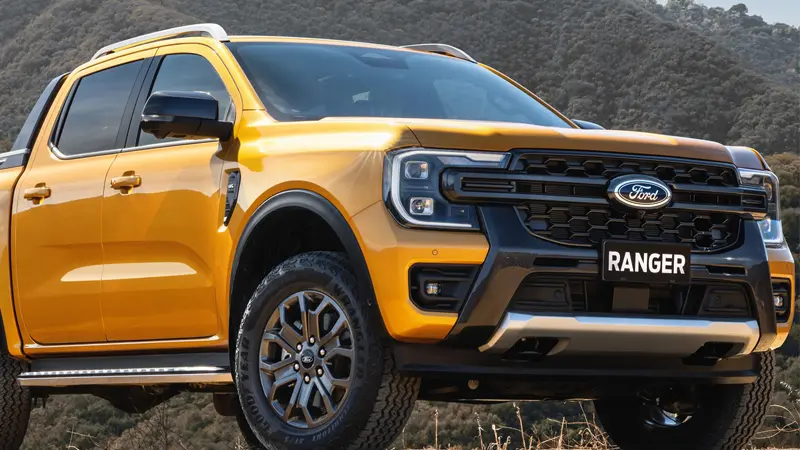
 In four-wheel-drive (4WD) vehicles, driveshafts play a heavy-duty role in delivering power to both the front and rear axles through a transfer case. Unlike AWD systems, 4WD is typically driver-selectable and designed for off-road or high-load situations. The driveshafts must handle higher torque levels, while the halfshafts—especially at the front—are built to withstand steep articulation angles and rugged terrain. This design ensures dependable power delivery when traction is limited or uneven.
Across FWD, AWD, and 4WD vehicles, the shared purpose of driveshafts and halfshafts is to transmit engine power efficiently while accommodating steering, suspension movement, and varying traction demands. These components are essential for maintaining smooth acceleration, predictable handling, and drivetrain reliability. When properly designed and maintained, driveshafts and halfshafts enable vehicles to perform safely and effectively across a wide range of driving conditions.
A vehicle’s axle is a central mechanical component that connects the wheels and supports the weight of the vehicle. Its primary purpose is to bear the load of the vehicle, including passengers and cargo, while maintaining proper wheel alignment and stability. By keeping the wheels positioned correctly relative to the chassis, the axle helps ensure predictable handling, balanced weight distribution, and safe operation under a wide range of driving conditions.
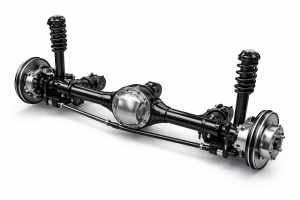 In addition to supporting weight, many axles are responsible for transmitting power from the engine to the wheels. These drive axles transfer torque through the drivetrain, allowing the wheels to rotate and propel the vehicle forward. Whether in front-wheel drive, rear-wheel drive, or all-wheel drive configurations, axles play a critical role in traction, acceleration, and overall drivetrain performance.
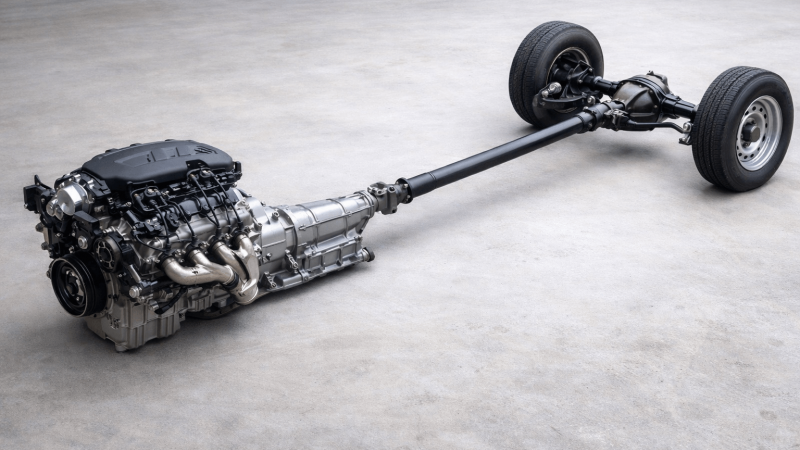
A propshaft is a drivetrain component whose primary purpose is to transmit rotational power from the vehicle’s transmission or transfer case to the differential. It allows engine torque to be delivered over a distance, which is especially important in vehicles where the engine and driven axle are separated, such as rear-wheel-drive (RWD) and four-wheel-drive (4WD) layouts. By transferring this power efficiently, the propshaft enables the driven wheels to rotate and propel the vehicle forward.
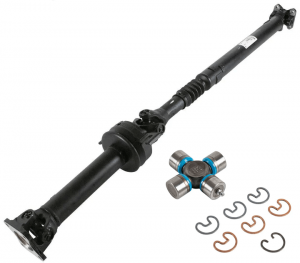 In addition to power transfer, the propshaft is designed to accommodate changes in distance and angle caused by suspension movement. Universal joints or constant-velocity joints allow the shaft to rotate smoothly even as the axle moves up and down. This flexibility helps reduce vibration, maintain drivetrain alignment, and ensure reliable performance under varying driving conditions, making the propshaft essential to smooth acceleration and overall drivetrain durability.
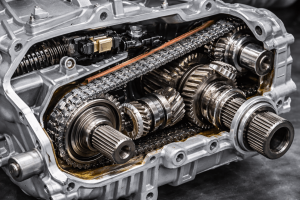
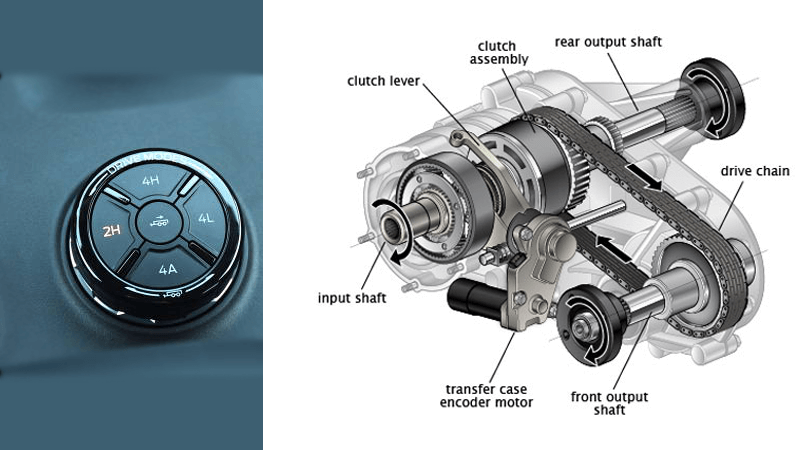
A transfer case is a drivetrain component found in four-wheel-drive (4WD) and all-wheel-drive (AWD) vehicles, and its primary purpose is to distribute engine power to multiple axles. It receives rotational power from the transmission and directs it to the front and rear driveshafts, allowing all four wheels to be driven when needed. In many systems, the transfer case enables the vehicle to switch between two-wheel drive and four-wheel drive, improving efficiency during normal driving and providing additional traction when conditions demand it.
In addition to power distribution, a transfer case often manages torque multiplication and traction control. Many transfer cases include a low-range gear set, which reduces vehicle speed while increasing torque for off-road driving, towing, or navigating steep or uneven terrain. By coordinating power delivery and adapting to different driving conditions, the transfer case plays a critical role in vehicle capability, stability, and drivetrain durability.