How Does a Car Engine Work - Step by Step for Beginners
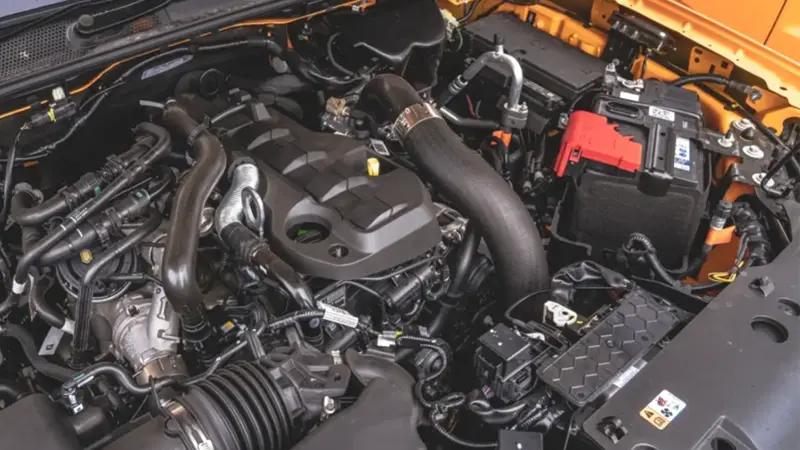
If you’ve ever wondered what actually happens when you turn your car key or press the start button, you’re not alone. A car engine might seem complicated, but at its core, it’s just a clever machine that converts fuel into motion.
Let’s break it down in the simplest way possible.
At its core, a car engine is designed to convert fuel into motion using controlled explosions. Don’t worry—it’s much simpler than it sounds.
The Basic Idea: Fuel - Energy - Movement
A car engine’s job is to convert fuel (petrol or diesel) into energy that turns the wheels. It does this through a series of tiny, controlled explosions happening very quickly inside the engine.
- Mixing fuel and air
- Igniting it
- Using the resulting force to move parts
That movement eventually turns your wheels and gets you down the road.
Key Engine Components
Below are the main components that create the motion. For an in-depth explanation of all the components that create the engine click here.
Cylinder
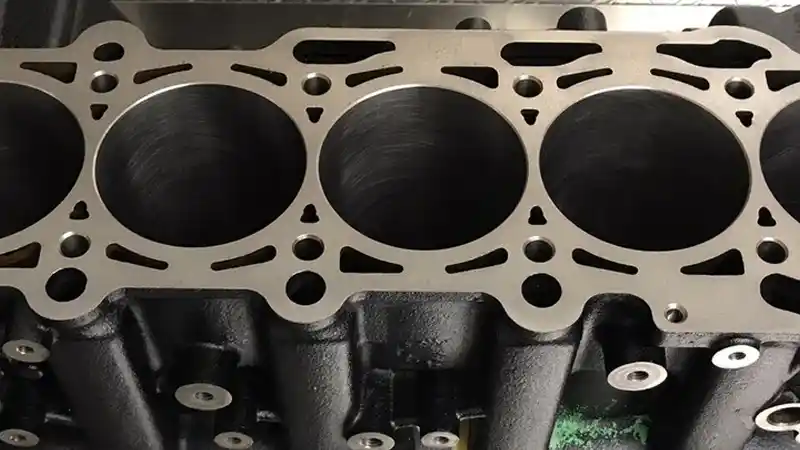
The engine cylinder, also known as the cylinder block, is the core working chamber of a car’s engine, where fuel and air are combined, compressed, and ignited to produce power. Inside each cylinder, a piston moves up and down, helping carry out the four stages of the engine cycle.
Piston
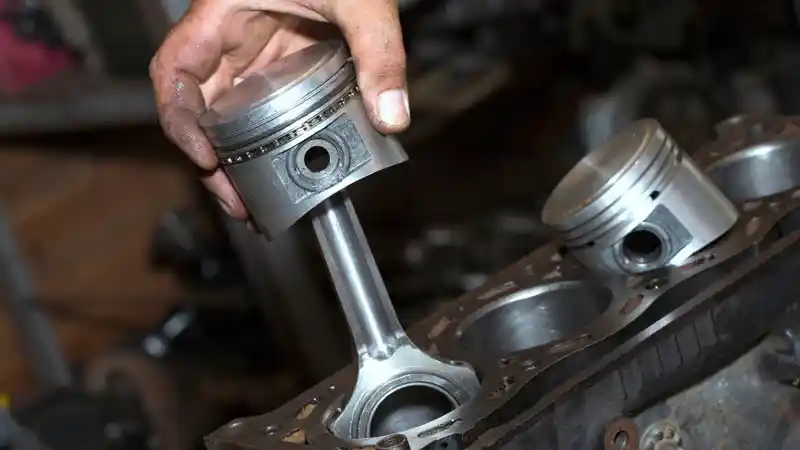
The piston is a crucial moving component inside a car’s engine cylinder, responsible for converting the energy from fuel combustion into mechanical motion. It moves up and down within the cylinder during the engine’s cycle—drawing in the fuel-air mixture, compressing it, and then being forced downward by the explosion that follows ignition. This motion is then transferred to the crankshaft, which turns it into rotational energy to drive the wheels.
Crankshaft
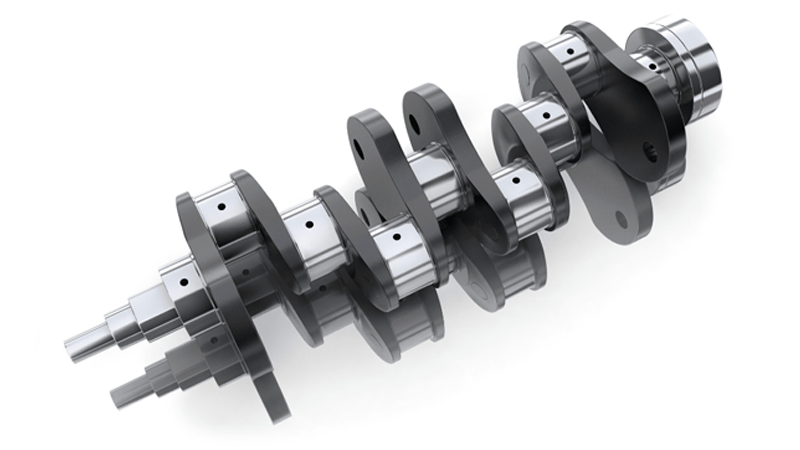
The crankshaft is the component that converts the up-and-down motion of the pistons into rotational movement that can drive the car’s wheels. As each piston is pushed down during the power stroke, it turns the crankshaft, causing it to spin continuously.
This spinning motion is then transferred through the transmission to move the vehicle forward. Built for strength and balance, the crankshaft ensures smooth and consistent engine operation, helping reduce vibrations while delivering steady power.
Spark Plug and Glow Plug
Spark Plug
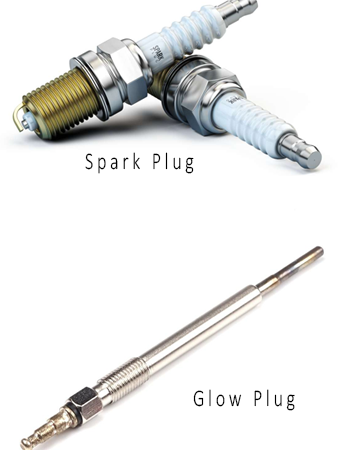
The spark plug is a small but essential part of a petrol engine that ignites the fuel-air mixture inside the cylinder. It produces a tiny electric spark at exactly the right moment during the engine cycle, triggering the controlled explosion that pushes the piston down and generates power.
Without the spark plug, the engine wouldn’t be able to start or run properly, making it vital for efficient and reliable performance.
Glow Plug
The glow plug is a component used in diesel engines to help start the engine, especially in cold conditions. Instead of creating a spark like a spark plug, it heats the air inside the cylinder so that the diesel fuel can ignite more easily when compressed.
This ensures smoother and more reliable starting, particularly in low temperatures where diesel engines can struggle to ignite fuel on their own.
Valves
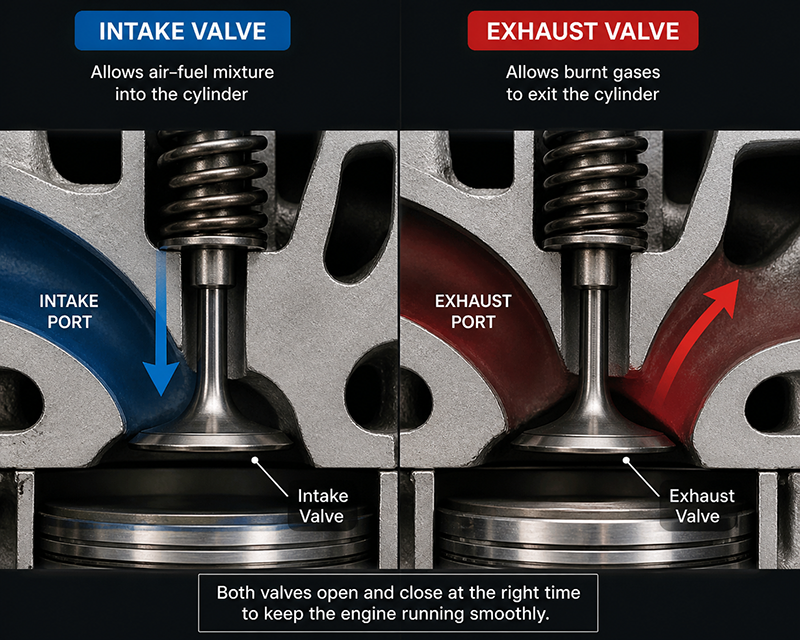
The intake and exhaust valves control the flow of gases in and out of the engine’s cylinder, ensuring the engine cycle runs smoothly. During the intake stroke, the intake valve opens to allow a mixture of air and fuel to enter the cylinder while the exhaust valve remains closed. After combustion, during the exhaust stroke, the exhaust valve opens to let burnt gases escape while the intake valve stays closed.
These valves open and close at precisely timed intervals, allowing the engine to “breathe” efficiently and maintain consistent performance.
The four main steps of a 4-stroke engine
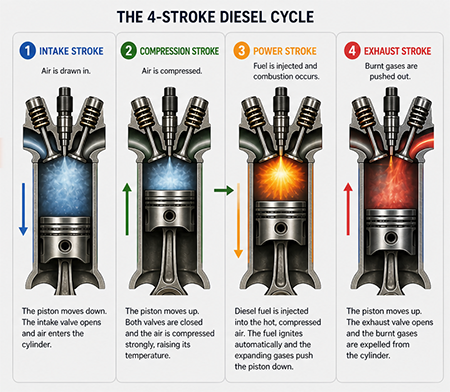
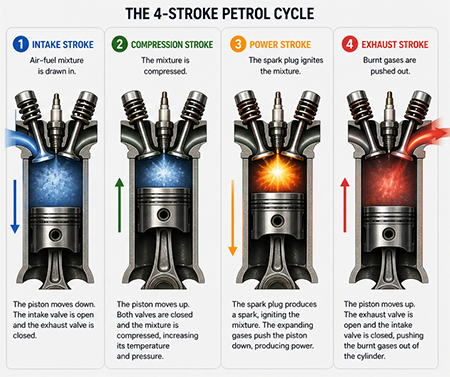
Most car engines work in four steps. These are called the four strokes.
1. Intake
During the intake stroke of a 4-stroke engine, the piston moves downward inside the cylinder, creating a vacuum. This vacuum draws in a fresh mixture of air and fuel (in petrol engines) or just air (in diesel engines) through the open intake valve. At the same time, the exhaust valve remains closed to ensure the mixture is properly pulled into the cylinder. This step prepares the engine for the next stage by filling the cylinder with the necessary gases for combustion.
2. Compression
During the compression stroke, the piston moves upward inside the cylinder, compressing the air-fuel mixture (in petrol engines) or air alone (in diesel engines). Both the intake and exhaust valves are closed during this stage, sealing the cylinder so the contents can be squeezed tightly. This compression increases the pressure and temperature inside the cylinder, making the mixture more powerful when it is ignited in the next stage.
3. Power
During the power stroke, the compressed air-fuel mixture (in petrol engines) is ignited by the spark plug, or in diesel engines the fuel ignites due to high temperature and pressure. This creates a rapid expansion of gases—a controlled explosion—that forces the piston downward with great force. Both valves remain closed during this stage to contain the pressure, and this is the only stroke that actually produces power, driving the crankshaft and ultimately moving the car.
4. Exhaust
During the exhaust stroke, the piston moves upward inside the cylinder while the exhaust valve opens. This motion pushes the burnt gases left over from combustion out of the cylinder and into the exhaust system. The intake valve remains closed during this stage to prevent any fresh air or fuel from entering. This process clears the cylinder, making it ready for the next intake stroke so the cycle can begin again.
The easiest way of remembering is: Suck – Squeeze – Bang – Blow
This cycle repeats thousands of times per minute while you’re driving.
How This Turns into Motion
Here’s how the process moves your car:
- Explosions push the pistons
- The pistons turn the crankshaft
- The crankshaft spins
- Power goes through the transmission
- Wheels rotate
That’s how your car moves forward.
PETROL V DIESEL
| Feature | Petrol Engine | Diesel Engine |
|---|---|---|
| Ignition Method | Uses a spark plug to ignite fuel | No spark plug; fuel ignites from compression |
| Fuel Type | Petrol | Diesel |
| Air-Fuel Mixture | Mixed before entering the cylinder | Air compressed first, fuel injected later |
| Compressed Ratio | Lower (8:1 to 12:1) | Higher (14:1 to 23:1) |
| Efficiency | Less Fuel-efficient | Mre Fuel-efficient |
| Power Delivery | Smoother, higher revving | More torque, lower revving |
| Fuel Economy | Lower | Better mileage |
| Engine Noise | Quieter | Louder, more vibration |
| Starting in Cold | Easier | Can be harder (uses glow plugs) |
| Maintenance Cost | Usually cheaper | Often more expensive |
| Lifespan | Generally shorter | Typically longer |
In Short
- Petrol engines are smoother and better for everyday driving.
- Diesel engines are more efficient and better for heavy-duty or long-distance use.