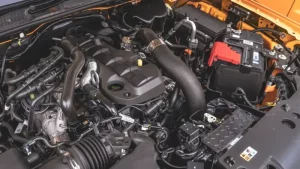

The exhaust system operates in a continuous cycle while the engine is running. The process begins inside the engine and ends at the tailpipe.
Step 1: Combustion inside the engine
The process begins when the engine burns a mixture of fuel and air inside its cylinders. This combustion creates energy that powers the vehicle, but it also produces exhaust gases as a byproduct.
These gases build pressure inside the cylinder and must exit quickly so the next combustion cycle can occur.
Step 2: Exhaust gases exit through the exhaust manifold
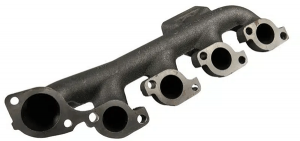 Once combustion is complete, the exhaust valves open and the gases leave the engine through the exhaust manifold. The manifold collects exhaust gases from multiple cylinders and funnels them into a single pipe. This component is designed to withstand extremely high temperatures, sometimes exceeding 800°C (1470°F).
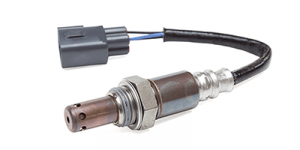 After leaving the exhaust manifold, the gases pass an oxygen sensor (O2 sensor). This sensor measures the oxygen levels in the exhaust gases and sends information to the vehicle’s engine control unit (ECU).
The ECU uses this data to adjust the air-to-fuel ratio in the engine. This ensures optimal combustion, which helps improve fuel efficiency and reduce emissions.
Modern vehicles often have multiple oxygen sensors, typically placed before and after the catalytic converter.
Step 4: Catalytic converter reduces harmful emissions
Next, the exhaust gases enter the catalytic converter, which is one of the most important parts of the exhaust system.
Inside the catalytic converter is a honeycomb structure coated with precious metals such as platinum, palladium, and rhodium. These metals act as catalysts that trigger chemical reactions.
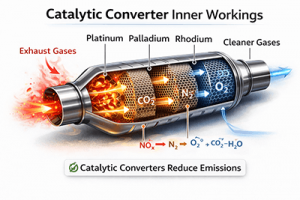 The catalytic converter converts harmful gases into safer ones:
- Carbon monoxide becomes carbon dioxide
- Nitrogen oxides break down into nitrogen and oxygen
- Hydrocarbons convert into water vapor and carbon dioxide
This process significantly reduces the amount of pollution released into the environment.
After passing through the catalytic converter, exhaust gases may pass through a resonator.
The resonator is designed to modify sound frequencies produced by the engine. It helps eliminate unpleasant noises and improves the overall sound quality of the exhaust system.
Not all vehicles have resonators, but they are common in many modern cars.
Step 6: Muffler (backbox) reduces engine noise
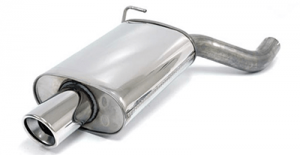 The muffler or backbox is responsible for reducing the loud noise created by exhaust gases leaving the engine.
Inside the muffler are chambers and perforated tubes that reflect sound waves. These sound waves cancel each other out through a process called destructive interference.
This dramatically reduces engine noise and ensures vehicles operate quietly.
Step 7: Exhaust gases exit through the tailpipe
Finally, the exhaust gases exit the system through the tailpipe, which releases them safely behind the vehicle.
The tailpipe directs gases away from the vehicle to prevent them from entering the passenger cabin.